Eindhoven University of Technology (TU/e)
Founded in 1956, located in the heart of the Brainport region. The university collaborates with companies and knowledge partners to drive technological progress.
TU/e conducts research and develops technological innovations in engineering and technology. This knowledge serves as the starting point for applications that are further developed by partners and brought to market for practical implementation.
As part of its strategy towards 2030, TU/e focuses on sustainability, digitalization, and societal transitions. Central to this strategy is educating engineers and accelerating knowledge development.

Goal: A multimodal approach to grid congestion
BACH (Brainport Approach for a Congestion-free Holland)
The BACH project aims to increase the effective capacity of the energy system by coupling electricity, heat, and gas (including hydrogen and e-methane). To coordinate the operation of a wide range of physical installations, a generic Energy Management System is being developed that optimizes the use of different energy carriers in an integrated manner. In addition, data from grid operators is used to determine where this concept can unlock additional grid capacity on the congestion map of the Netherlands. The project is being carried out in collaboration with partners such as Enexis, RIFT, and Zympler.
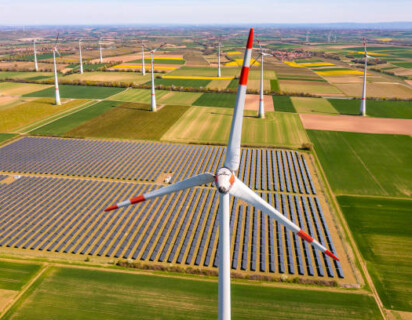
The Dutch electricity grid is increasingly reaching its limits. The rapid growth of renewable energy is causing congestion in many areas, preventing new solar and wind projects from being connected or limiting their connection capacity. BACH is developing an intelligent solution to address this challenge. Rather than focusing solely on expanding the energy system, BACH aims to make smarter use of existing infrastructure. The project develops an innovative approach in which different energy carriers, storage technologies, and conversion systems are managed in an integrated way through an open-architecture Multi-Commodity Energy Management System (MC-EMS).
At the same time, BACH is developing a data-driven approach to system integration, providing insight into how flexibility can be deployed to unlock additional grid capacity within the existing energy system. This enables surplus energy from solar and wind sources to be stored flexibly or converted into other forms of energy, such as hydrogen, e-methane, heat, or iron fuel. By intelligently balancing energy supply and demand, additional capacity becomes available on the electricity grid without requiring immediate grid reinforcement.
This approach is being tested on the TU/e campus using, among other technologies, a mobile battery, electrolyser, iron fuel conversion, aquifer thermal energy storage (ATES) systems, power-to-gas, and gas-to-power technologies.
In addition, the consortium is developing an impact analysis tool that identifies where system integration can make the greatest contribution to reducing grid congestion. This will provide grid operators such as Enexis, Stedin, and Alliander with better insight into promising locations where flexibility solutions can help optimize the use of the electricity grid within existing constraints.
Enablemi’s role
The strength of BACH


Binnen het project ondersteunen Enablemi en Jeroen Musch de projectmanagementactiviteiten en de coördinatie binnen het consortium, als aanvulling op mijn rol vanuit de TU/e als wetenschappelijk projectleider. Onze samenwerking binnen het projectmanagementteam draagt bij aan een goede afstemming tussen de technische, organisatorische en stakeholder-gerelateerde aspecten van BACH.
Christina Papadimitriou, Assistent Professor bij de Technische Universiteit Eindhoven
The BACH-project contributes to the following Sustainable Development Goals (SDGs)


More information about the MOOI?
Do you have an idea that could accelerate the energy transition and want to translate it into a strong consortium, but need guidance on requirements, funding opportunities, and strategic positioning?
The MOOI programme supports consortia working on system-level breakthroughs in the energy transition. From research to real-world implementation, MOOI makes large-scale innovation feasible and achievable.
We would be happy to think along with you. Contact Jeroen for more information.